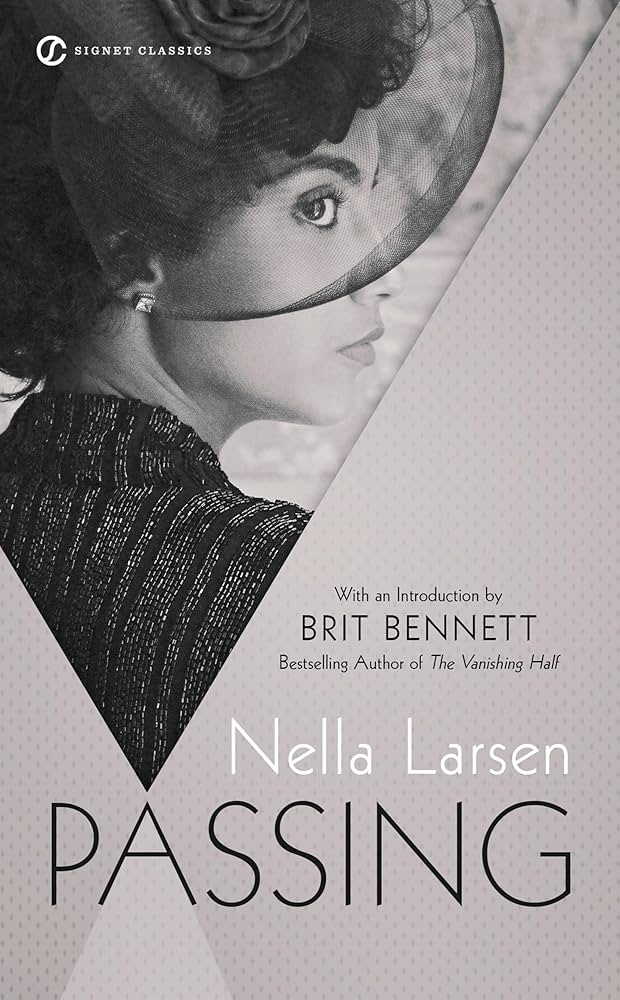
About the Book
In the novel Passing by Nella Larsen, the story follows Irene Redfield and her surprise encounter with her childhood friend, Clare Kendry. Upon meeting with Clare, Irene learns that Clare had married a white man while passing as white, and keeping her race concealed from him. Irene is shocked by this and tries to end the conversation. However, Clare convinces her to meet with her husband and herself on the following Tuesday, to which Irene reluctantly agrees.
Passing explores themes of racial identity, friendship, and societal expectations in 1920s America. Through the intertwined lives of Irene and Clare, Larsen explores the complexities of "passing" and the consequences it involves.
Racial Identity
Larsen's story of passing goes beyond a story of deception. Clare's choice to pass as white represents both freedom and repression, as she gains access to money and social status, but must always live in fear of being found out. The novel makes the reader confront the ethical and personal implications of passing.
The position Irene is in is just as complicated. She doesn't always pass as white, but she sometimes does if the situation requires it. This fluidity of her racial identity shows the complexities of race, as well as the reason she is so uncomfortable with Clare's decision to live her life always passing as white. She may not be morally put off, but rather made fearful due to her own ideas about race.
One of the most important parts of the novel is when Larsen shows how arbitrary race and the discrimination that comes along with it are. Both Clare and Irene have a light enough complexion to pass as white, but their personal choices have led them to lead extremely different lives. This leads to a question for the reader: What does it mean to be a part of a race in a society whose only interaction with race is exclusion?
The tragedy of passing is not just how it affects those who do it, but how it exposes the ridiculousness of racial discrimination. Clare's decision to live her life passing as white appears not to have had any obvious negative consequences on her, despite her husband's constant racist tirades. However, constantly having to live like this destroys one's own psyche, as you are forced to conceal yourself for fear of violence.
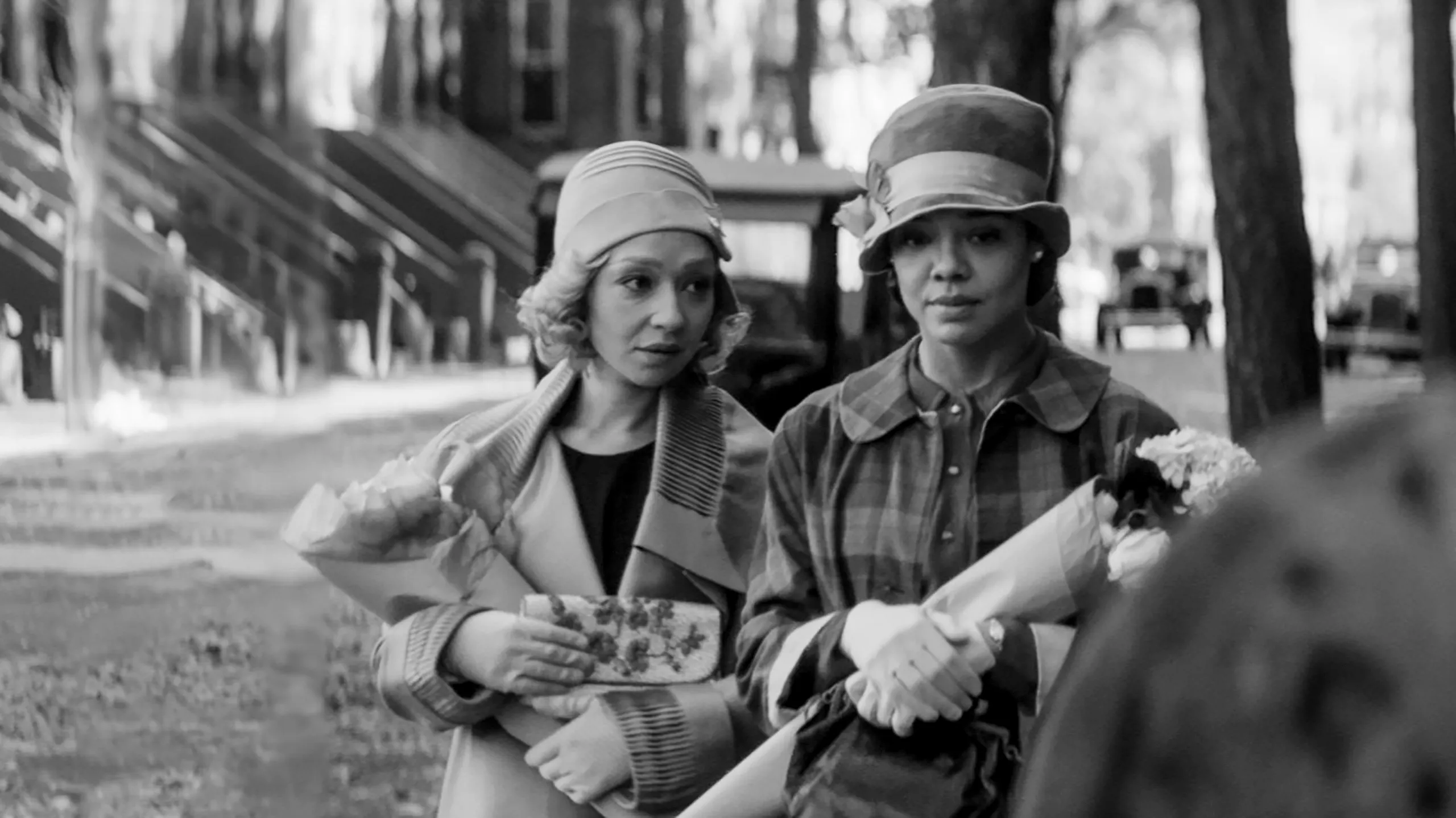
Irene and Clare in the film version of Passing

The complex friendship between Irene and Clare
Friendship?
Irene and Clare's relationship goes beyond a friendship or rivalry. It is intentionally made ambiguous to the reader by Larsen, making the reader decide what is causing Irene's obsession with Clare: envy, dismay, or even repressed attraction for Clare.
Irene's emotions are most notable for their contradictions. She says she values being secure and respectable above everything else, but also is always with Clare, who, to Irene at least, represents the opposite of those values. Her being jealous of the time Clare spends with Brian may not be about their own love, but rather the threat that Clare poses to the life that Irene has built. Does Irene want to protect her marriage, or protect herself from her own desire?
Clare's fate shows her as both a victim and a perpetrator of passing. She has trapped herself by passing her whole life as white, yet consistently takes actions that risk her being found out. She is constantly close to having her true identity exposed, yet does nothing, or even makes it more likely for it to happen. This suggests that she may want to live her life as a black woman, even if it means risking everything. This is in contrast to Irene, who is cautious in ensuring she is not found out to be black during the times she does pass.
The novel's ending, Clare's death, is another example of the ambiguity that Larsen creates throughout the novel. There are no simple answers to the questions posed in the novel, and many things are left up to interpretation by the reader. However, what actually happened is less important than what the reader's own interpretation reveals about racial identity and the idea of passing. However Clare passed, her death represents the consequences of an impossible choice in society.